

Panchakki is a historic water mill in the Dargah complex of Baba Shah Musafir in Chhatrapati Sambhaji Nagar, formerly Aurangabad. Its underground water channel, mill and surrounding religious and historic structures make it a distinctive stop in the city. From New Bharti’s hotel rooms, Panchakki is about a 13-minute drive.
- What it is: A medieval water mill within a dargah complex.
- Where it is: Near Medical College Road in Chhatrapati Sambhaji Nagar.
- What powers the mill: Water brought through an underground channel to an artificial waterfall.
- Hours: Incredible India gives visiting hours as 09:00 AM to 05:00 PM; check before setting out.
What is Panchakki?
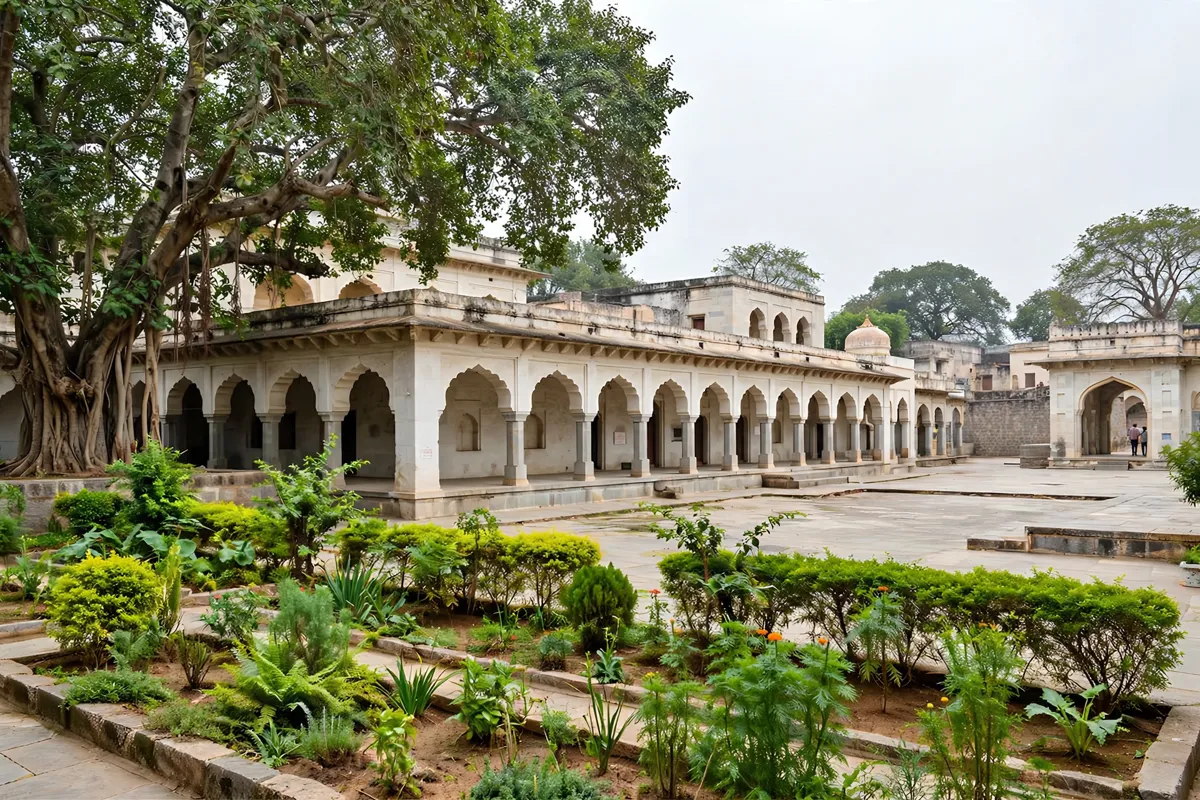
Panchakki is a water mill set within the Baba Shah Musafir Dargah complex, a site with religious, historic and garden features.
The district administration describes the mill as dating to the 17th century, while the National Mission on Monuments and Antiquities classifies it as medieval and dates it to approximately the 16th–17th centuries CE. Incredible India gives a construction date of 1744 AD.
These dates reflect different descriptions of the site’s history, rather than one single date shared by every source. Panchakki is near Medical College Road, Aurangabad, PIN 431001. The district administration places it 1 km from the city, without specifying a starting point.
If you are planning a wider day of historic sights, you can pair Panchakki with the one-day route through Aurangabad’s historic sights.
How did Panchakki’s water system work?
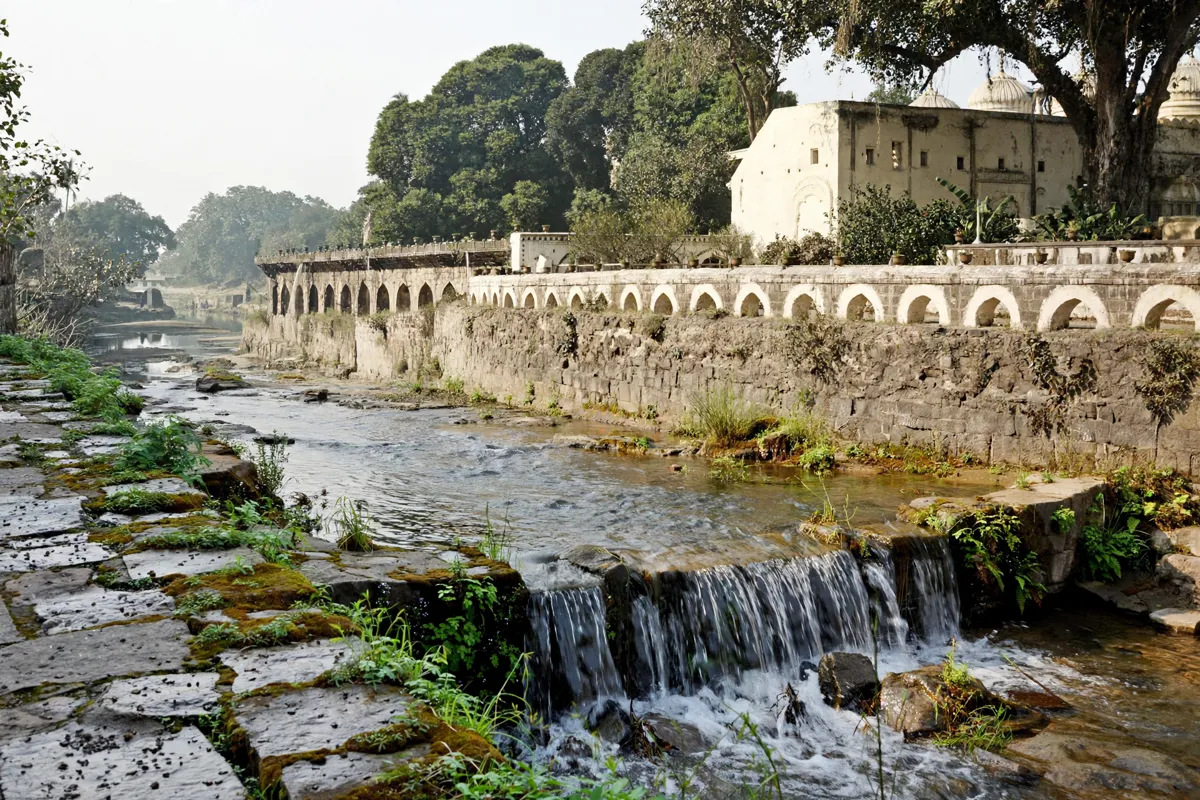
Panchakki’s mill was powered by water carried through an underground channel from the mountains. The district administration says the channel runs more than 8 km to its source and ends at an artificial waterfall that powers the mill.
The municipal information sheet describes a perennial sheet of water that turns the mill’s large iron blades and flour-mill stones. Incredible India describes water arriving through earthen pipes from an underground source that it identifies as a tributary of the Harsul River, about 6 km from Panchakki; it says the channel powers the mill through a water wheel.
The channels are traditionally attributed to Malik Amber, according to the municipal sheet. It also notes substantial later work, during Aurangabad’s last days and under Asaf Jah I. Together, these accounts point to a water system developed and worked on across different periods.
How do you get to Panchakki from the station area?
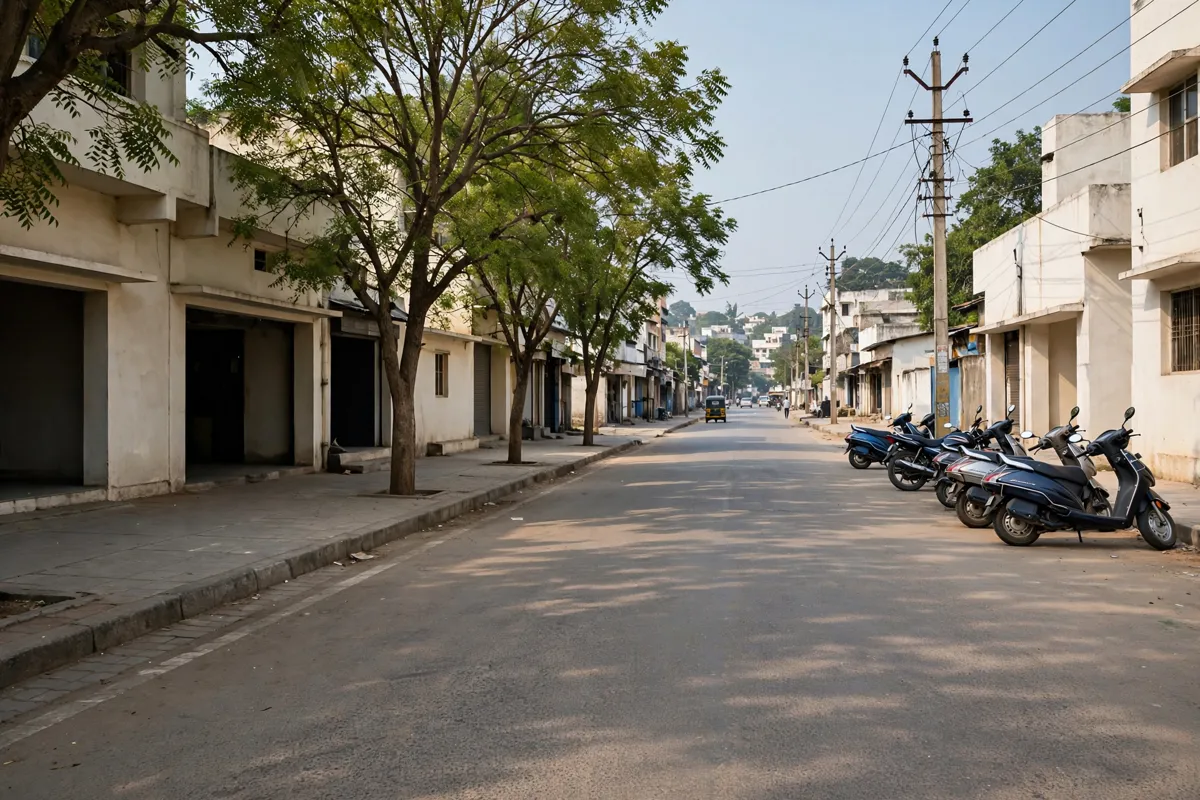
Aurangabad Railway Station (AWB) is identified as the nearest railway station, and Chhatrapati Sambhaji Nagar Airport (IXU) as the nearest airport by Incredible India. If you are arriving by rail, Panchakki is a city stop rather than a station-side attraction; plan the onward leg from the station separately.
The landmark is also described as 1 km from the city by the district administration, though that distance has no stated starting point. For a larger itinerary, group Panchakki with other historic sights rather than treating that city-distance figure as a precise route measurement.
What should you look for on site?
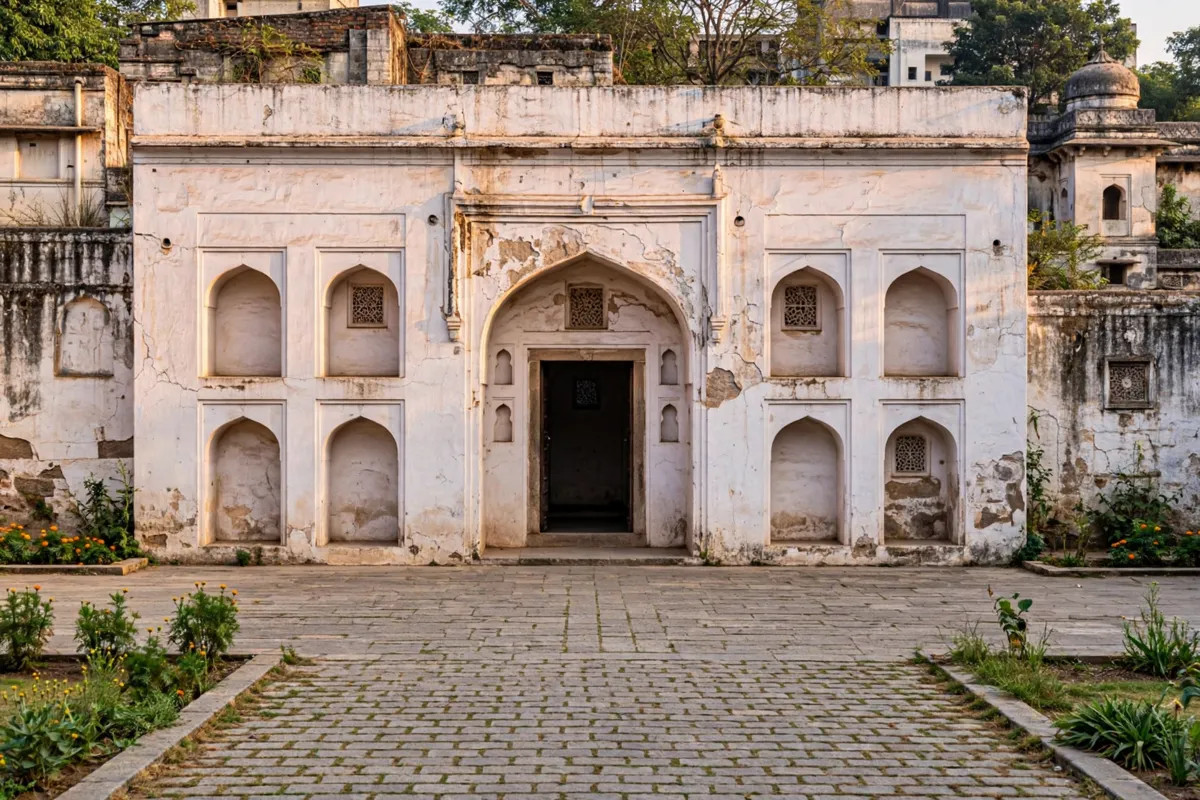
Give attention to both the mill and the wider complex. The district administration names the Baba Shah Musafir Dargah, a garden, other monuments, views of the Kham River, the saint’s cenotaph and graves of his disciples among the features around the mill.
The municipal information sheet also names the Dargah of Hazrat Baba Shah Musafir and Hazrat Baba Ahmad Sayid, a mosque and a sarai within the premises.
Incredible India describes a courtyard, madrasa, minister’s residence, mosque, women’s dwellings and sarai, as well as a garden with fountains, flowering trees and plants. The mausoleum of Baba Shah Musafir is another feature identified by the same source.
As you walk through, notice how the water system and the buildings share the site. The mill’s channel and water wheel explain Panchakki’s practical purpose, while the dargah, cenotaph and surrounding structures give the complex its broader context. For another landmark in the city, the Bibi Ka Maqbara visitor guide covers a different stop.
What should you check before visiting Panchakki?
Incredible India gives Panchakki’s opening hours as 09:00 AM to 05:00 PM. Hours can be time-sensitive, so check the official site before you go; the listed source is Incredible India.
Use the site’s location near Medical College Road to orient your plans, but confirm the route and current visiting arrangements before setting out. The stated hours are a useful starting point for planning your visit.
FAQs
What is Panchakki famous for?
Panchakki is known for its water mill, powered by water brought through an underground channel to the site.
How long is Panchakki’s underground water channel?
The district administration says the channel runs more than 8 km to its source in the mountains.
What are Panchakki’s visiting hours?
Incredible India gives the hours as 09:00 AM to 05:00 PM. Hours may change, so confirm them before visiting.
Is Panchakki part of a religious complex?
Yes. The water mill is within the Dargah complex of Baba Shah Musafir, which includes a dargah and other religious and historic structures.